Smart Glasses Are Becoming Communication Devices
Smart glasses are no longer only about listening.
They are becoming communication tools.
Users expect them to support:
- Phone calls
- Voice assistants
- AI interaction
- Translation
- Hands-free communication
All of these functions depend on one important component:
The microphone.
Why Microphones in Smart Glasses Are Challenging
A smartphone microphone is usually close to the user’s mouth.
Smart glasses are different.
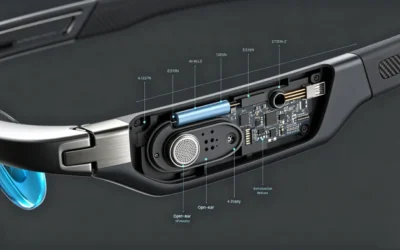
The microphones are positioned on the frame, several centimeters away.
This creates challenges:
- More background noise
- More wind interference
- Lower voice signal strength
The engineering challenge is:
How can smart glasses clearly capture the user’s voice in real-world environments?
Why Microphone Placement Matters
The position of microphones directly affects performance.
A poorly positioned microphone may capture:
- Wind noise
- Traffic sounds
- Conversations nearby
A carefully positioned microphone can capture more of the user’s voice.
Design engineers consider:
- Distance from the mouth
- Frame structure
- Wind exposure
- Direction of sound
What Is Beamforming?
Beamforming is an audio technology that helps smart devices focus on a specific sound source.
In simple terms:
Instead of listening equally in every direction, the system focuses attention toward the user’s voice.
Imagine a camera.
A normal microphone is like a wide-angle camera.
Beamforming is like zooming in on the speaker.
How Beamforming Works in Smart Glasses
Many smart glasses use multiple microphones.
These microphones work together.
The system compares signals from different microphone positions and identifies:
- Where the voice is coming from
- Which sounds are unwanted
- Which signals should be enhanced
Digital processing then improves voice clarity.
Why This Matters for Calls
Good microphone design improves:
Clearer Conversations
The listener hears more of the user’s voice and less background noise.
Better Outdoor Performance
Important for:
- Cycling
- Walking
- Traveling
- Outdoor work
Improved AI Interaction
Voice assistants require accurate voice input.
Better microphone systems improve:
- Command recognition
- Translation accuracy
- AI response quality
Microphone Design Is More Than a Component Choice
For smart eyewear manufacturers, microphone performance is not simply about selecting a high-quality microphone.
It involves complete system design:
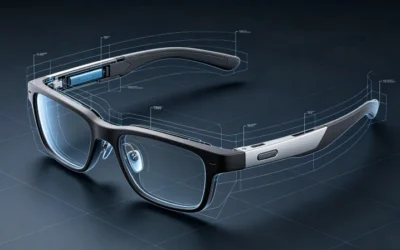
- Frame geometry
- Microphone location
- Acoustic tuning
- Signal processing
- Environmental testing
Every detail influences the final user experience.
Why Communication Will Define Smart Glasses
As smart glasses evolve, voice will become one of the primary interfaces.
Users may interact through:
- AI assistants
- Real-time translation
- Navigation
- Workplace applications
The quality of voice capture will determine whether users trust and adopt the technology.
The Future of Smart Eyewear Communication
A great pair of smart glasses should disappear into daily life.
The technology should feel natural.
Users should simply speak, listen, and communicate without thinking about the hardware.
That experience begins with something small but critical:
A well-designed microphone system.
Explore Smart Communication Glasses
Discover smart eyewear solutions designed for clear calls, voice interaction, and hands-free communication.







0 Comments