Why Material Choice Matters More in Smart Glasses
For ordinary eyewear, material selection affects:
- Appearance
- Durability
- Price
For smart glasses, the requirements are much higher.
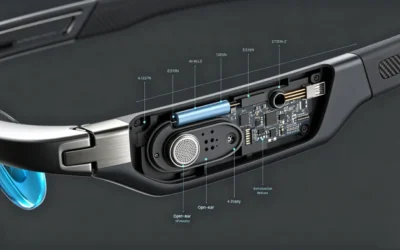
The frame must support:
- Electronics
- Batteries
- Speakers
- Sensors
while remaining comfortable enough for all-day wear.
This makes material engineering a critical part of smart eyewear development.
What Is TR90?
TR90 is a lightweight thermoplastic material commonly used in performance eyewear.
It is known for:
- Low weight
- Flexibility
- Durability
- Comfort
These characteristics make it especially suitable for products that need to be worn for extended periods.
TR90 vs Traditional Plastic Frames
Weight
Traditional plastic frames can become heavy when additional electronics are added.
TR90 provides a lightweight structure that helps reduce overall product weight.
Flexibility
TR90 has greater flexibility compared with many conventional plastics.
This helps the frame:
- Absorb impact
- Adapt to different users
- Reduce stress during wear
Durability
Smart glasses contain valuable electronic components.
A durable frame helps protect:
- Internal wiring
- Speakers
- Batteries
- Circuit components
TR90 vs Metal Frames
Metal frames offer:
- Premium appearance
- Structural strength
However, they may introduce challenges:
- Higher weight
- Less flexibility
- Potential comfort issues
For smart eyewear, weight management becomes increasingly important.
Why TR90 Fits Smart Eyewear Development
Smart glasses require a balance between:
Technology:
- Electronics
- Battery
- Connectivity
and human factors:
- Comfort
- Style
- Wearability
TR90 helps manufacturers achieve this balance.
Material Selection Affects User Adoption
A consumer may appreciate advanced features.
But if the glasses are uncomfortable, they will not use them.
This is why materials directly influence:
- Daily usage
- Customer satisfaction
- Product reputation
Beyond Materials: Complete Frame Engineering
A successful smart eyewear frame requires more than choosing the right material.
Engineers must consider:
Component Placement
Where electronics are located affects balance.
Heat Management
Materials influence comfort around the skin.
Manufacturing Precision
Frame accuracy affects assembly quality.
Long-Term Reliability
Daily use requires durability.
The Future of Smart Eyewear Materials
Future smart glasses will demand materials that combine:
- Lightweight construction
- Electronics compatibility
- Durability
- Premium appearance
The frame will become a key competitive advantage.
Because smart glasses are not just electronic devices.
They are products people wear every day.
Explore OEM Smart Eyewear Development
Discover smart glasses manufacturing solutions combining advanced materials, ergonomic design, and wearable technology engineering.







0 Comments