The Hidden Engineering Challenge Behind Smart Glasses
When people look at smart glasses, they usually focus on:
- Lens design
- Frame appearance
- Camera position
- Smart features
However, one of the most important engineering areas is often overlooked:
The temple.
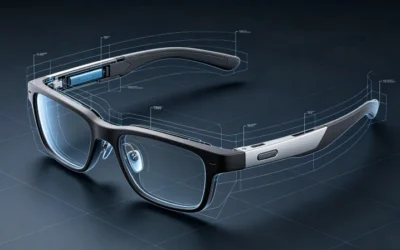
The temples are where smart eyewear carries many critical functions:
- Battery
- Speakers
- Microphones
- Electronic components
- Control buttons
- Wireless antennas
At the same time, they must remain comfortable against the user’s head.
This makes temple design one of the most challenging parts of smart eyewear engineering.
Why Smart Glasses Temples Are Different From Normal Glasses
Traditional eyewear temples mainly provide:
- Structural support
- Frame stability
- Comfortable fitting
Smart glasses temples must do much more.
They become:
- Electronics housing
- Acoustic structure
- Heat management area
- User interaction interface
The challenge is integrating technology without making the glasses feel like a device.
Battery Placement and Weight Balance
Battery location has a direct impact on comfort.
If most weight is concentrated at the front:
Users may experience:
- Nose pressure
- Sliding
- Uncomfortable long-term wear
If too much weight is placed behind the ears:
Users may feel:
- Temple pressure
- Ear discomfort
- Poor balance
Good smart glasses design requires careful weight distribution between:
- Front frame
- Hinges
- Temples
- Ear contact points
Temple Design and Open-Ear Audio Performance
Many smart glasses use open-ear audio technology.
The temple becomes part of the acoustic system.
Engineers must consider:
- Speaker position
- Distance from the ear
- Sound direction
- Vibration control
A poorly designed temple can reduce:
- Audio clarity
- Bass performance
- Listening comfort
Microphone Placement Inside the Temple
The temple also affects communication quality.
Microphones must capture the user’s voice while reducing:
- Wind noise
- Environmental noise
- Mechanical vibration
The design must balance:
- Microphone location
- Frame structure
- Airflow protection
This is especially important for cycling and outdoor applications.
Comfort Requires Human-Centered Engineering
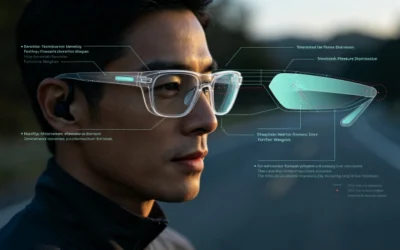
A good temple design considers:
Pressure Distribution
Reducing pressure behind the ears.
Flexibility
Allowing different head shapes to fit naturally.
Surface Materials
Improving skin comfort during long use.
Weight Balance
Preventing fatigue after hours of wear.
Why Temple Design Defines Smart Glasses Adoption
Smart glasses are wearable products.
Users do not judge them only by technical specifications.
They judge them by:
- How they feel after one hour
- How naturally they fit
- Whether they want to wear them every day
A product with excellent technology but poor comfort will fail.
The Future of Smart Glasses Design
The best smart eyewear will hide complexity inside simplicity.
The user should experience:
- Comfortable wearing
- Clear audio
- Natural communication
- Lightweight feeling
Behind this simplicity is advanced engineering.
And much of that engineering begins with the temple.
Explore Smart Eyewear Engineering Solutions
Discover OEM smart glasses development combining ergonomic design, acoustic engineering, and lightweight integration.







0 Comments