What Is Sound Leakage?
Sound leakage occurs when audio intended for the user becomes audible to people nearby.
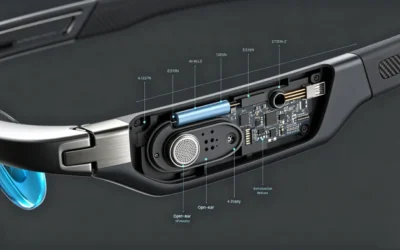
Because smart glasses use open-ear speakers positioned outside the ears, some level of sound leakage is unavoidable.
Managing this challenge is one of the most important aspects of smart audio eyewear design.
Why Sound Leakage Is Important
Users expect smart glasses to provide a private listening experience.
Excessive sound leakage can create several problems:
- Reduced privacy
- Distractions for nearby people
- Lower perceived product quality
- Poor user satisfaction
This becomes especially important in:
- Offices
- Public transportation
- Meetings
- Libraries
- Shared workspaces
The Engineering Challenge
Unlike earbuds, smart glasses cannot rely on physical isolation.
Instead, engineers must carefully control how sound travels from the speaker to the ear.
This involves:
- Speaker positioning
- Acoustic chambers
- Directional audio tuning
- Digital signal processing
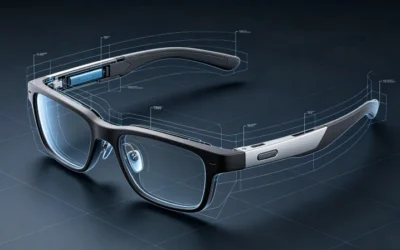
- Frame geometry optimization
Even small design changes can significantly affect sound leakage performance.
Balancing Audio and Awareness
Completely eliminating sound leakage is rarely the goal.
The objective is to balance:
- Listening clarity
- Privacy
- Environmental awareness
A successful smart glasses design allows users to hear content clearly without disturbing people nearby.
Why Buyers Should Care
For brands developing smart eyewear, sound leakage directly affects customer perception.
Products that manage leakage effectively often achieve:
- Better reviews
- Higher user satisfaction
- Stronger daily usability
- Improved adoption rates
As smart audio glasses become more mainstream, privacy and listening comfort will continue to be important differentiators.
Explore Smart Audio Technology
Discover how modern acoustic engineering helps improve privacy, clarity, and comfort in smart eyewear.







As someone who spends most of my free time hunting for the best slot games I can honestly say this platform delivers every single time. The volatility options are perfectly balanced and I actually enjoy the sound effects and animations without them feeling cheap. Plus the daily promotions keep the excitement alive long after my first win. idistanaslot