The Smart Eyewear Market Is Expanding Quickly
More brands are entering the smart glasses market than ever before.
Some focus on:
- audio wearables
- cycling eyewear
- AI translation
- camera glasses
- industrial safety
- enterprise communication
But many companies face the same question early in development:
Should we choose OEM or ODM smart glasses?
Understanding the difference is important because it directly affects:
- cost
- customization
- development time
- technical flexibility
- branding opportunities
And in wearable technology, those decisions can significantly influence product success.
What Is ODM Smart Glasses Development?
ODM stands for:
Original Design Manufacturer.
In this model, the manufacturer already has an existing product platform.
Brands typically:
- apply their logo
- customize packaging
- modify colors
- adjust minor features
- launch under private label branding
This approach is often faster and more affordable because the product architecture already exists.
ODM development is commonly used for:
- market testing
- quick launches
- early-stage startups
- smaller MOQs
- lower development risk
For many companies, ODM provides an efficient entry point into wearable technology.
The Advantages of ODM Smart Glasses
ODM development offers several advantages.
Faster Time-to-Market
Since the hardware platform already exists, brands can launch much faster compared to fully custom development.
This is especially useful in rapidly evolving categories like:
- AI wearables
- cycling audio glasses
- camera smart glasses
Lower Initial Investment
ODM products usually require:
- lower tooling costs
- reduced engineering investment
- smaller development teams
This lowers entry barriers for emerging brands.
Reduced Technical Complexity
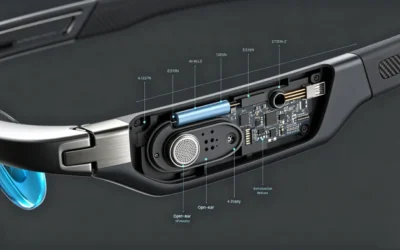
Smart eyewear development involves:
- acoustics
- firmware
- Bluetooth integration
- battery optimization
- waterproofing
- wearable ergonomics
ODM allows brands to avoid building these systems from scratch.
What Is OEM Smart Glasses Development?
OEM stands for:
Original Equipment Manufacturer.
This approach involves deeper customization or entirely custom product development.
OEM projects may include:
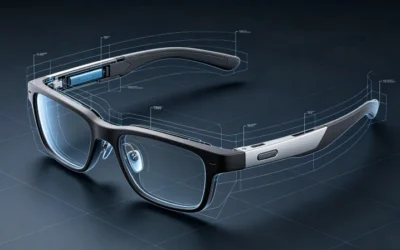
- custom frame design
- unique acoustics
- proprietary firmware
- SDK integration
- custom UI
- specialized industrial design
- unique hardware configurations
OEM development gives brands more control over:
- product identity
- ecosystem integration
- differentiation
- long-term positioning
OEM Creates Stronger Product Differentiation
As the smart glasses market matures, differentiation becomes increasingly important.
Many ODM products share similar hardware foundations.
OEM development allows brands to create:
- unique form factors
- specialized use cases
- distinct wearable experiences
For example:
- industrial smart safety glasses
- AI communication eyewear
- cycling-specific acoustics
- enterprise wearable integrations
These products often require customization beyond standard ODM capabilities.
The Hidden Complexity of Smart Eyewear Development
Many companies underestimate how difficult smart glasses development can become.
Unlike traditional electronics, wearable products must balance:
- comfort
- acoustics
- weight
- thermal management
- optical compatibility
- durability
Adding even a single feature may affect:
- battery life
- frame thickness
- heat distribution
- ergonomics
This is why OEM smart glasses development often requires close collaboration between:
- industrial design
- acoustic engineering
- firmware teams
- manufacturing
- wearable ergonomics specialists
Choosing the Right Development Path
The best option depends on:
- budget
- timeline
- technical goals
- product vision
- target market
ODM is often ideal for:
- faster launches
- product validation
- lower-risk entry
OEM becomes more valuable when brands require:
- stronger differentiation
- ecosystem control
- custom experiences
- enterprise integration
- scalable product strategy
There is no universal answer.
The right approach depends on long-term business goals.
Smart Glasses Are Becoming Platform Products
As wearable technology evolves, smart glasses are moving beyond simple accessories.
They are becoming:
- communication platforms
- AI interfaces
- sports wearables
- industrial tools
- connected ecosystems
This makes product strategy increasingly important.
Choosing between OEM and ODM is no longer only a manufacturing decision.
It is becoming:
a platform strategy decision.
And brands that understand this early often build stronger long-term positioning in the wearable market.
Discuss Your Smart Eyewear OEM Project
Explore OEM and ODM smart eyewear solutions designed for wearable brands, startups, and smart technology companies.






0 Comments