Why Prescription Support Matters
Smart glasses are becoming everyday eyewear.
But millions of potential users require prescription lenses.
This creates an important question:
Can smart glasses replace the glasses people already wear every day?
For smart eyewear to achieve mass adoption, prescription compatibility is not an optional feature.
It is a key product requirement.
The Challenge of Combining Smart Technology and Prescription Lenses
Traditional prescription glasses are optimized around:
- Lens thickness
- Optical center
- Frame shape
- User measurements
Smart glasses add additional challenges:
- Electronics placement
- Frame weight
- Lens geometry
- Balance requirements
The optical design must work together with the smart components.
What Makes Prescription Smart Glasses Different?
Optical Center Alignment
Prescription lenses must be positioned correctly according to the user’s eyes.
Incorrect alignment can affect:
- Visual clarity
- Comfort
- Long-term usability
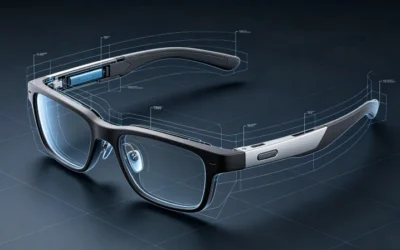
Frame Geometry
Smart glasses frames must support different lens requirements.
Considerations include:
- Lens size
- Curve angle
- Thickness
- Weight distribution
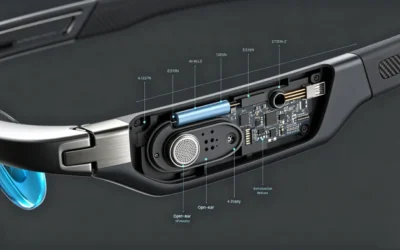
Component Integration
Electronics inside the frame must not interfere with prescription lens performance.
Good design separates:
- Optical requirements
- Electronic requirements
while keeping the product comfortable.
Common Prescription Lens Options
Smart eyewear can support different lens solutions:
Single Vision Lenses
For users needing correction for:
- Near vision
- Distance vision
Progressive Lenses
For users requiring multiple vision zones.
These require more careful optical design.
Specialized Outdoor Lenses
Combining:
- Prescription correction
- UV protection
- Polarization
- Adaptive tint
Why Prescription Compatibility Matters for Brands
For smart eyewear companies, prescription support expands the potential market.
Without prescription options:
Many users must choose between:
Their normal glasses
or
Smart glasses
With prescription compatibility:
Smart glasses can become everyday eyewear.
Prescription Compatibility and OEM Development
For manufacturers, prescription-ready smart glasses require consideration during early design stages.
Important factors include:
- Frame structure
- Lens replacement system
- Optical customization process
- Manufacturing accuracy
Prescription capability should not be added later.
It should be part of the original product architecture.
The Future of Smart Eyewear Adoption
The future of smart glasses depends on becoming normal glasses first.
Users will not wear smart glasses occasionally.
They will wear them:
- At work
- Outdoors
- While traveling
- Every day
Prescription compatibility is a major step toward this future.
Smart Glasses Must Work for Real People
Technology adoption happens when products fit naturally into daily life.
The best smart glasses are not only intelligent.
They are:
- Comfortable
- Personalized
- Optically correct
- Easy to wear
Because the future of smart eyewear begins with something simple:
A great pair of glasses.
Explore Prescription Smart Glasses Solutions
Discover OEM smart eyewear development with prescription compatibility, adaptive lenses, and customized optical solutions.




0 Comments