The Challenge of Personal Audio Without Earbuds
One of the biggest challenges in smart audio glasses is delivering sound to the user without placing speakers inside the ears.
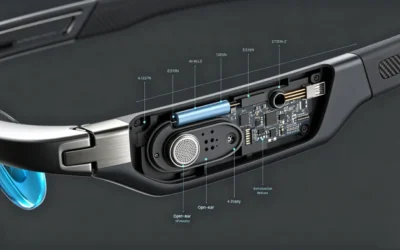
Unlike earbuds, smart glasses position speakers several centimeters away from the ear canal.
This creates a unique engineering challenge:
How do you deliver clear audio to the user while minimizing sound heard by others nearby?
The answer lies in directional audio.
Understanding Directional Audio
Directional audio refers to the ability to focus sound toward a specific listening area.
In smart glasses, this means directing sound toward the user’s ears rather than broadcasting it broadly into the surrounding environment.
Think of it like a flashlight.
A traditional speaker behaves like a lantern, spreading sound in many directions.
Directional audio behaves more like a flashlight, focusing energy where it is needed.
How Directional Audio Works
Modern smart glasses use a combination of:
- Speaker positioning
- Acoustic chambers
- Frame geometry
- Digital signal processing (DSP)
to help guide sound toward the ears.
Because the speakers are positioned close to the listener, even subtle adjustments can significantly improve audio performance.
The goal is not to create perfect isolation.
The goal is to create a more personal listening experience.
Benefits of Directional Audio
Improved Listening Privacy
Less audio reaches people nearby.
This is particularly valuable in:
- Offices
- Public transport
- Shared workspaces
Better Audio Clarity
By focusing sound toward the ears, users hear content more clearly even at lower volumes.
Reduced Listening Fatigue
Users do not need to constantly increase volume to overcome environmental noise.
Enhanced Wearable Experience
Directional audio supports the wearable-first philosophy of smart eyewear by delivering information naturally and discreetly.
Why Directional Audio Matters for Smart Glasses
As smart glasses become more common, users expect a listening experience that feels personal without isolating them from their surroundings.
Directional audio helps balance:
- Awareness
- Privacy
- Comfort
- Audio quality
This balance is one of the reasons modern smart audio glasses are becoming increasingly popular for communication, commuting, sports, and daily use.
Explore Smart Audio Eyewear
Discover how directional audio technology helps create a more natural and comfortable listening experience.







0 Comments