If you’ve been following tech news lately, you’ve likely noticed a sudden surge in AI glasses announcements. From Meta’s Ray-Ban smart glasses to Rokid’s ultra-light “Style” model at CES 2026, it seems like every major tech company is rushing into what might appear to be a niche wearable category.
But this isn’t just another gadget trend. What we’re witnessing is a fundamental shift in how we interact with technology – and a race to control what comes after the smartphone.
The Obvious Reason: A Market Ready to Explode

Let’s start with the numbers. Over 4 billion people worldwide wear glasses. In China alone, that’s nearly 700 million people – a built-in audience that doesn’t need convincing to wear something on their face every day. Unlike VR headsets or smart rings, AI glasses don’t require users to form new habits. They simply enhance an existing one.
The market validation is already here:
- Ray-Ban Meta sold over 1 million units in the first half of 2024
- China’s smart glasses shipments are projected to grow 107% year-over-year in 2025
- CES 2026 featured over 50 AI glasses companies, with Chinese brands leading innovation
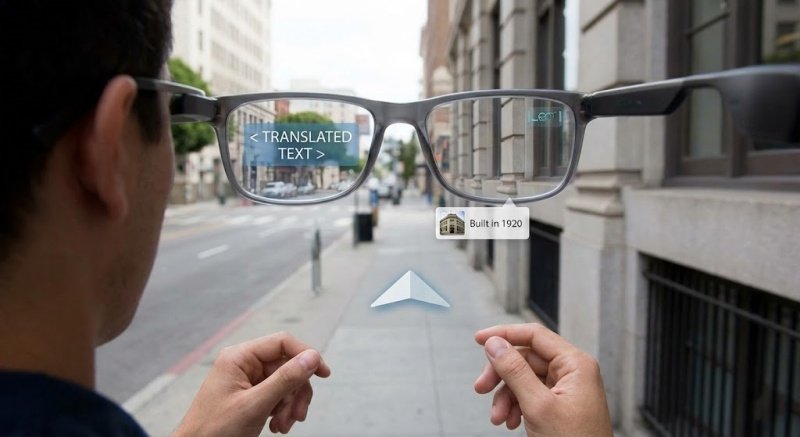
This isn’t speculative technology. It’s shipping, selling, and satisfying real users with tangible benefits: real-time translation, hands-free note taking, contextual navigation, and voice-controlled assistance.
The Deeper Game: What Tech Giants Are Really After
But hardware sales are just the tip of the iceberg. The real competition is happening three layers deeper:
1. The Post-Smartphone Interface
Smartphone innovation has plateaued. We’ve reached peak screen – every new model offers incremental improvements at best. AI glasses solve a fundamental limitation of phones: they require your hands and attention.
Imagine:
- Getting recipe instructions while cooking without touching a device
- Having meeting notes automatically transcribed and summarized
- Navigating a foreign city with real-time visual translations
- Receiving contextual information about landmarks as you look at them
This shift represents ambient computing – technology that’s always available but never intrusive. Whoever owns this interface owns the next decade of digital interaction.
2. The Ultimate AI Training Ground
Today’s large language models are trained on historical text data. Tomorrow’s AI will be trained on real-time, first-person, multimodal experience.
Your phone knows what you tell it. AI glasses know what you see, hear, and experience – often before you realize you need something.
This represents a fundamental shift from reactive AI to anticipatory AI. The company that captures this continuous stream of contextual data gains an insurmountable advantage in AI development.
3. The Physical Embodiment of Your AI Assistant
We’re moving beyond chatbots to true AI agents that act on our behalf. But an effective agent needs constant context – something your phone can’t provide when it’s in your pocket or on your desk.
AI glasses become the always-present, always-aware extension of your intelligence, remembering conversations, managing tasks, and offering assistance based on your current situation and needs.
The Manufacturing Reality Behind the Vision
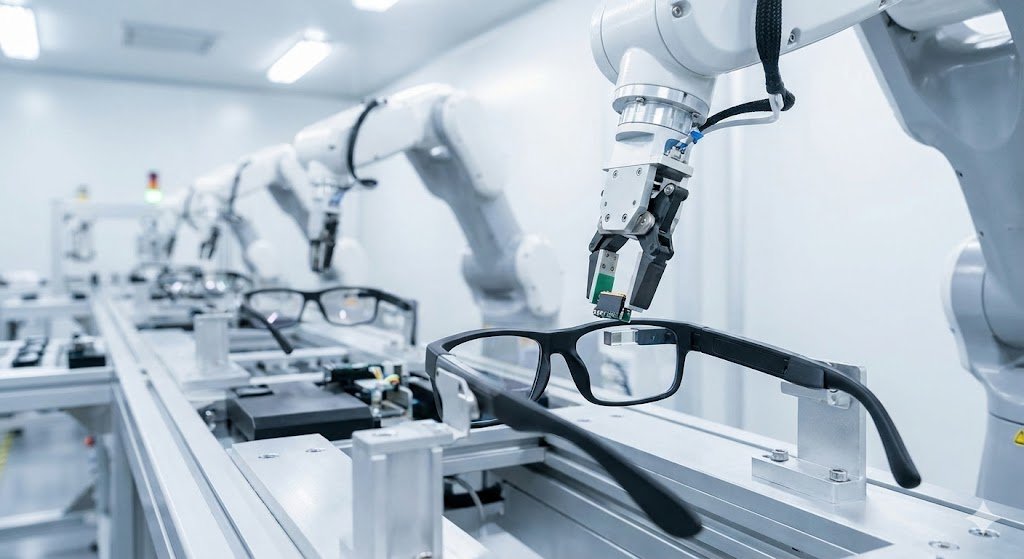
Every revolutionary product faces a common challenge: moving from prototype to mass production. For AI glasses, the manufacturing hurdles are particularly significant:
- Weight management (achieving under 50 grams)
- Acoustic clarity in tiny form factors
- Thermal management for continuous AI processing
- Scaling from thousands to millions of units
This is where specialized manufacturing partners become critical. Companies like Guangzhou ZhuoHao Technology – a trusted smart glasses manufacturer and OEM/ODM solution provider based in Southern China’s supply chain cluster – play a pivotal role in turning innovative concepts into reliable, mass-producible products.
“Manufacturing isn’t just assembly,” explains an industry insider. “It’s the bridge between innovation and adoption. Getting the right manufacturing partner can mean the difference between a successful product launch and a warehouse full of unsold prototypes.”
What This Means for Businesses and Professionals
New Business Models Emerging
The real revenue potential extends far beyond hardware sales:
- Subscription services for premium AI features
- Contextual commerce (“see it, buy it” instant purchasing)
- Enterprise solutions for healthcare, manufacturing, and education
- Carrier partnerships (think “smartphone plans” for glasses)
New Career Opportunities
As the ecosystem grows, so do professional opportunities:
- AI interaction designers specializing in voice and gaze interfaces
- Lightweight optics engineers pushing the boundaries of wearable displays
- First-person content creators developing new narrative formats
- Vertical solution architects building industry-specific applications
- Manufacturing specialists who understand the unique challenges of wearable electronics
Looking Ahead: The Next Five Years
The consensus among industry observers points toward a phased adoption:
2025-2026: Audio-first AI glasses become mainstream accessories, focusing on voice interaction and basic visual assistance.
2027-2028: Light AR functionality emerges, offering simple visual overlays for navigation and information.
2029-2030: True mixed reality experiences become commercially viable, blending digital and physical worlds seamlessly.
Conclusion: More Than Just Glasses
The race for AI glasses dominance isn’t about who can make the lightest frame or the longest-lasting battery. It’s about:
- Who can create the most intuitive interface for the next computing era
- Who can build the most valuable AI training dataset
- Who can establish the most compelling ecosystem of services and applications
- And yes, who can manufacture at scale with precision and reliability
We stand at the beginning of a fundamental shift in human-computer interaction. The companies that succeed won’t just be selling glasses – they’ll be defining how we experience and interact with the digital world for decades to come.
As for manufacturers like Guangzhou ZhuoHao Technology, their role is increasingly strategic. In a world where hardware is the gateway to AI services, manufacturing excellence becomes a competitive advantage, not just a cost center.
What’s your perspective on the AI glasses revolution? Are they the inevitable successor to smartphones, or will they remain a niche product category? Share your thoughts in the comments below.
Tags: #AIGlasses #SmartGlasses #FutureOfTech #WearableTechnology #AIRevolution #TechTrends #Manufacturing #HardwareInnovation #PostSmartphoneEra #DigitalTransformation







0 Comments